Old Fashioned Mozzarella Cheese Recipe

Recipe Information
Mozzarella Cheese
Cultural Context
Mozzarella cheese originated in Italy, particularly in the Campania region, where it's traditionally made from water buffalo milk. It has become a staple in Italian cuisine, often used in dishes like Caprese salad and pizza. Today, mozzarella is enjoyed worldwide, with variations such as smoked mozzarella and low-moisture mozzarella popular in different culinary contexts.
milk
🥗Healthier: low-fat milk
💰Cheaper: powdered milk
Low-fat milk reduces calories while maintaining flavor.
rennet
🥗Healthier: vegetable rennet
💰Cheaper: lemon juice
Vegetable rennet is suitable for vegetarians.
salt
🥗Healthier: sea salt
💰Cheaper: table salt
Sea salt offers a more complex flavor.
cream
🥗Healthier: Greek yogurt
💰Cheaper: sour cream
Greek yogurt reduces calories while maintaining creaminess.
Skim the cream from the top of the milk if it is whole milk and save for butter making.
Add the milk to the cheese pot and slowly heat milk over medium heat to 90 degrees f.
Add the clabber culture and gently stir.
Mix the rennet with ¼ cup of cool water in a small bowl and add the rennet mixture to the milk.
Stir gently for a couple of minutes in an up and down and side to side motion to ensure that the rennet is fully dissolved in the cheese.
Allow the cheese to rest for 1 hour while the rennet coagulates the cheese.
After 1 hour check for a clean break in the curds by inserting a knife or your finger into the curds. If the curds break cleanly, move on to the next step. Otherwise let them rest for another 10 minutes or until the curd breaks cleanly.
Cut the curds into 1 inch pieces with a knife vertically and allow them to “heal” for 5 minutes.
Cut the curds with a knife horizontally so they are in a grid-like pattern and allow them to “heal” for another 5 minutes.
Gently stir the curds by hand, breaking up any chunks as needed so that all of the curds are about 1 inch square. Stir until the curds start to feel less soft.
Add the cover to the pot and allow the curds to “culture” for 3 hours. (If you are using citric acid instead of clabber, start checking the curd to see if it will stretch after 30 minutes.)
Heat some water to boiling and pour into a small bowl or cup.
Take a small chunk of the curds from the bottom of the pot and place it into the hot water. Allow to sit for 30 seconds.
Remove the cheese from the cup and slowly dip it in and out of the water to see if it will start to stretch. You’re looking for it to stretch to the roof without breaking off. If it doesn’t stretch to the roof, allow the cheese to set for 1 more hour before checking the stretch again.
Once the cheese stretches to the roof, remove as much whey from the pot as you can, and add boiling water. Allow the curds to set in the hot water for a few minutes to come to temperature. You can also turn the burner of your stove on medium-low heat. You want to heat them until they stretch, which is usually between 130 and 140 degrees.
Stir the curds using your spoon occasionally as you heat them, being careful not to overwork them.
Make string cheese by pulling a rope of cheese out of the pot and putting it straight into a bowl of cold water so it will hold it’s shape.
Form the curds into a smooth ball of cheese, similar to how you would shape a hamburger bun, but tucking the edges under gently. This gives you a nice glossy top on the ball of mozzarella.
Using your spoon gently stretch the cheese into a ball, being careful not to overwork it. I often get the whole batch of cheese out of the pot and into a bowl and then gently shape it into a large ball.
For the string cheese and mozzarella balls, or any small blocks of cheese, I recommend you just surface salt them by sprinkling a small amount of salt on the top and bottom of the cheese. Do not add small chunks of cheese to the salt brine because it will be way too salty.
For the large block of cheese, surface salt the top by sprinkling just a little bit of cheese on the top and allow it to rest for 10 minutes. Then flip the cheese over and surface salt the bottom the same way. Mix up the salt brine ingredients and add the large block of cheese to the salt brine. Allow it to set in the brine for approximately 2 hours per pound of cheese. Remove from the brine and allow it to dry in the refrigerator before slicing or shredding.
If you don't want to mess with making the brine or you have small to medium chunks of cheese, you can just sprinkle salt on the cheese while it's still hot. Fold it over itself and sprinkle some more cheese on it. This gradually incorporates salt into the cheese, without having to mix up the brine.
Shred or slice and use on pizza, over pasta, or in salads.
Mozzarella cheese can be refrigerated in an air-tight container for up to one week or frozen for up to 6 months.
Cooking Techniques
Equipment Needed
Spice Level:
🌶️🌶️🌶️Dietary
Allergens
Also Known As
More Mozzarella Cheese Videos
(13 videos)
How to Make Mozzarella Cheese | Homemade Mozzarella Recipe with Chef Natalie | Vito's Italian Cucina
Vito’s Italian Cucina | Authentic Italian Recipes
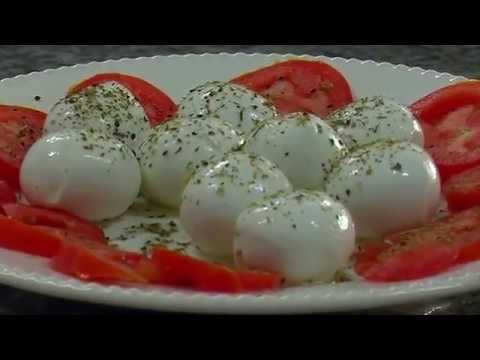
Cómo Producir Queso Mozzarella - TvAgro por Juan Gonzalo Angel
TvAgro

How to make MOZZARELLA CHEESE at home | chessy bread toast | 2minute snack
cookbites
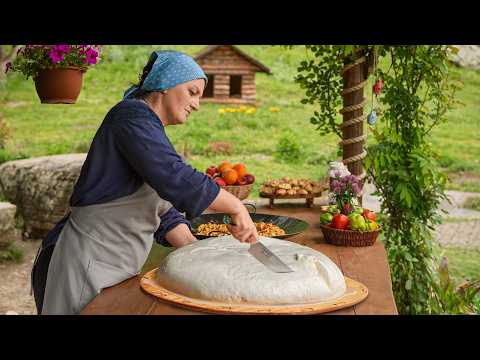
Traditional Mozzarella Cheese Making – A Mountain Village Legacy!
Faraway Village

I Got Schooled By Italian Mozzarella Masters...
Alex

How Italian Mozzarella Cheese Is Made | Regional Eats
Insider Food
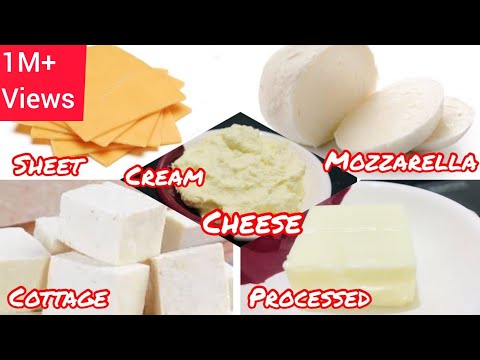
Homemade 5 different types of cheese Recipes | Mozzarella, processed, Cottage, Cream & Sheet Cheese
Muno’s Kitchen
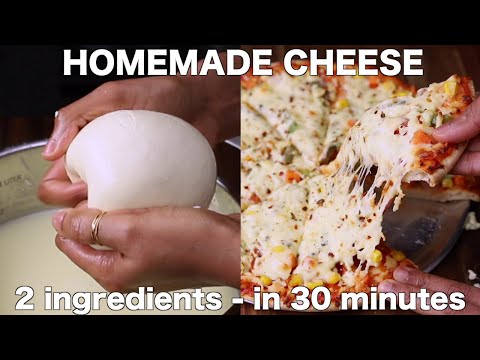
how to make cheese in 30 minute | घर पर बनाएं मोज़ेरेला चीज़ | mozzarella cheese without rennet
Hebbars Kitchen

Mozzarella Cheese Recipe By ijaz Ansari | How To Make Mozzarella Cheese At Home | No Rennet |
Ijaz Ansari Food Secrets

Mozzarella Cheese 🧀 Recipe ll First Time On YouTube ll #@SHCookingwithHafsa.
SH Cooking with HAFSA

How to Make Mozzarella Cheese.... The Natural Way!
Cheese From Scratch
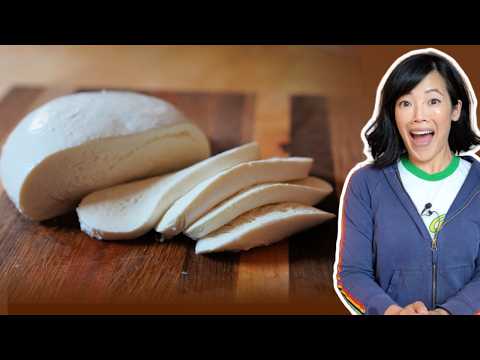
2-Ingredient Mozzarella Cheese In Minutes! No Rennet Recipe
emmymade

3 Ingredient Mozzarella Cheese ~ Simple Recipe
Homestead Corner
Similar Italian Videos
(24 videos)
Epic Party Snacks
Tasty Recipes

Tiramisu
Preppy Kitchen

뜨끈한 국물의 이탈리아식 해물탕(?) "해산물 토마토 스튜" ♡ 쌀쌀해진 날에 국물 요리가 생각날 때 제격이에요 ♡ 별미인 누룽지 추가요~ ♡
맛있는 날들 Delicious Days

✨️오뚜기 미트볼✨️ 초스피드 파스타 레시피-🍝💯│이재용 회장님의 '미트볼 파스타'도시락│시판용 미트볼 활용 끝판왕👾
이재용 회장님의 도시락

Pasta con le sarde - piatto tradizionale della cucina siciliana
Casa Pappagallo

Un classico INTRAMONTABILE della cucina siciliana che mette tutti d'accordo: PASTA ALLA CARRETTIERA!
CookAroundTv
LASAGNE - RICETTA DELLA NONNA MARIA
Ricette delle nonne
LASAGNE FACILI E VELOCI DA PREPARARE
CUCINA FACILE E VELOCE
LASAGNE RICETTA CLASSICA
Chef Stefano Barbato
LASAGNA CLASSICA RICETTA DI NONNA
Carlo Gaiano

LA LASAGNA, QUELLA VERA! Ragù, Besciamella e Pasta Fatti in Casa | Ricetta di Chef Max Mariola
Chef Max Mariola

PASTA ALLA NORMA
ICIO THE COOK
Siciliani Creativi - Pasta alla Norma, ricetta della variante alla messinese
Ada Parisi
NON LA SOLITA PASTA ALLA NORMA, dimentica le altre ricette, #videoricetteinsieme
atavolaconsilvia
Pasta alla Norma (ricetta siciliana)
LA RICETTA PER TE
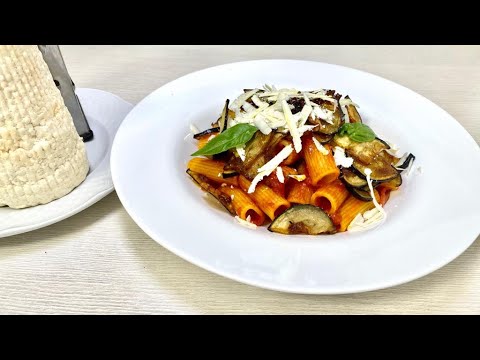
Pasta alla Norma Ricetta Originale
Chef Stefano Barbato

Come fare la PASTA ALLA NORMA di Benedetta Rossi - Ricetta TV Fatto in Casa per Voi
FATTO IN CASA PER VOI

Pasta alla Norma: come fare la classica pasta siciliana con melanzane!
Sonia Peronaci Official

Pasta alla norma S3 - P118
Casa Pappagallo
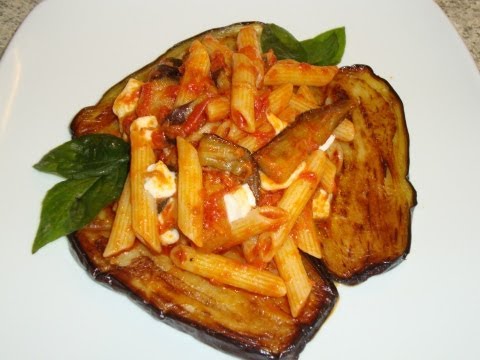
(19) Pasta alla Norma - ricetta rivisitata
Guarda Flo
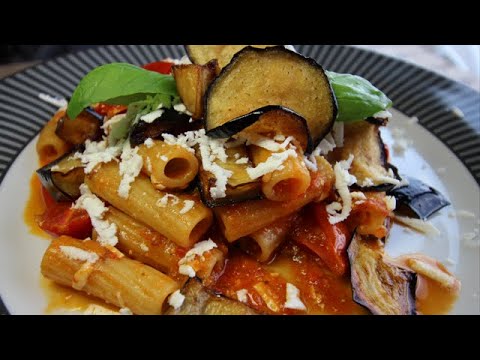
PASTA ALLA NORMA CON LE MELANZANE pasta alla norma pasta con le melanzane e la ricotta salata
Rapanello

PASTA ALLA NORMA - Ricetta tradizionale
Orazio Food Experience
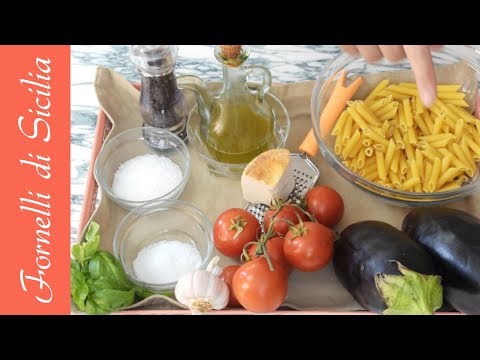
PASTA ALLA NORMA
Fornelli di Sicilia

PASTA ALLA NORMA (VERA RICETTA SICILIANA) | Le ricette di Giusina in Cucina
Food Network Italia
Similar Recipes From Other Cuisines
(24 videos)
Mayonnaise Recipe | How to make Mayonnaise
Recipes by Carina
✅NIGERIAN WHOLE WHEAT BREAD RECIPE(100%)| NIGERIAN BROWN BREAD| NIGERIAN BREAD RECIPE
Queenvarieties Channel

7 Best Kids Lunch Box Recipes By Recipes Of The World
Recipes of the world

Avocado Toast
Cooking with Coit
Boulangerie - La pâte à brioche
BaKnutt

recette Brioche maison facile
douja monde

RECETTE INRATABLE | BRIOCHE MAISON | Pour les nuls en brioche, comme moi !
Eloë 🌸

Simplement la recette de ma brioche maison Francine.
Choumchoumnass.🌹

La Brioche parfaite. Ma recette de brioche à la maison super facile pas à pas .
Boulangerie Pas à pas

Recette de Brioche maison moelleuse sans Robot !#brioche # brioche maison
Cooking by Nissou

Brioche extra moelleuse au Thermomix ® "recette facile"
Gourmandise et plaisir
Comment faire une baguette ?
VCE French - Pierrick Hubert

Baguette 1heure. 100%maison 100% rapide et facile.
Made'moizelle Cloé

RECETTE BAGUETTE MAISON : LA MEILLEUR :)
Nora
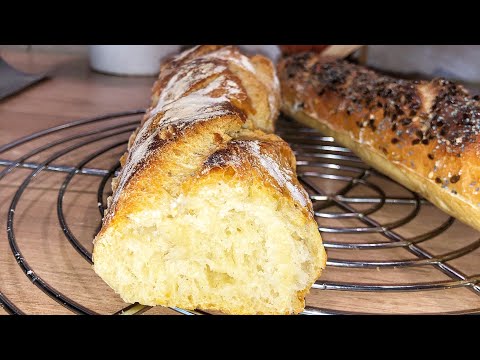
Baguette express et INRATABLE
Marjosamira Cook
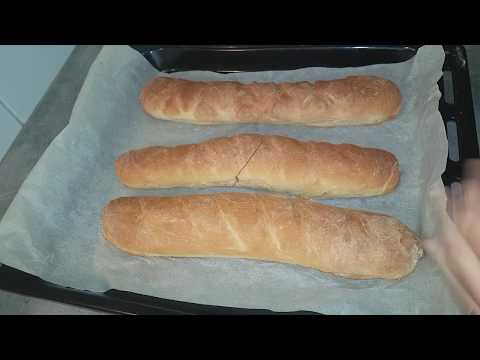
BAGUETTE TRES SIMPLE ET RAPIDE
Sabrina sabi

Recette de la tradition - la baguette comme à la boulangerie
Tziganette
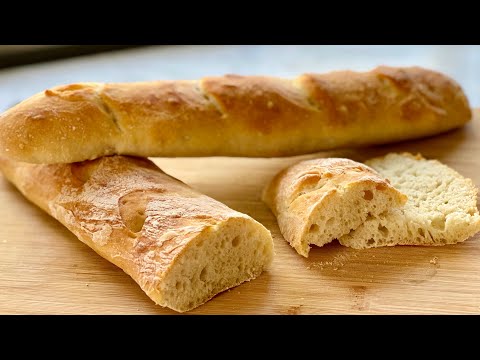
🥖 BAGUETTE MAISON SANS PÉTRISSAGE/ROBOT/MOULE 🥖 la recette express et inratable. Deli Cuisine
Deli Cuisine

Baguettes fait maison
cuisine et régal
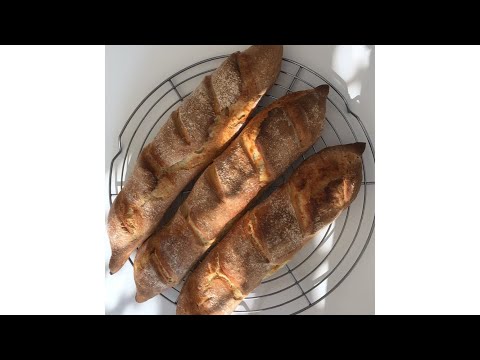
🥖Baguettes homemade croustillantes/mie aérée🥖
Selen Kaymaz
RECETTE FACILE LES BAGUETTES CROUSTILLANTES FAITE MAISON
Casa Bena Cuisine

4 petites baguettes maisons à la main dans votre four
Jean Lépine

🥐 Croissant 🥐Thermomix faits maison facile! 👍- Préparation pâte feuilletée pliage portefeuille Tuto
Antoine Minart

Croissants simples
Recette Chef Latifa الشيف لطيفة