The Secret to Making Perfect Cottage Cheese at Home!
Recipe Information
Homemade Cottage Cheese
Cultural Context
Cottage cheese has its roots in early American dairy farming, where it was made as a way to utilize leftover milk after butter production. Traditionally enjoyed as a light snack or breakfast item, it has become a staple in various diets due to its high protein content and versatility. Today, homemade cottage cheese is celebrated for its fresh flavor and can be customized with herbs, fruits, or spices, making it a popular choice for health-conscious eaters.
heavy cream
🥗Healthier: Greek yogurt
💰Cheaper: milk + cornstarch
Greek yogurt reduces calories while maintaining creaminess
milk
🥗Healthier: almond milk
💰Cheaper: powdered milk
Almond milk is lower in calories and dairy-free.
Sanitize all equipment and lay it out on a clean tea towel.
Pour 4 liters of full cream milk into a large pot and heat to 30°C (86°F).
Add the calcium chloride solution to the heated milk and stir for about a minute.
Sprinkle the starter culture over the milk and stir to incorporate it.
Allow the milk to ripen for 30 minutes.
After 30 minutes, stir the milk to mix in the cream if using unhomogenized milk, and check the temperature to ensure it is still around 30°C (86°F).
Add the rennet solution while stirring for no more than 1 minute, then cover and allow to set for 45 minutes.
After 45 minutes, check for a clean break; if not set, allow to rest for another 15 minutes and check again.
If still not set, let it rest for another 15 minutes until a clean break is achieved.
Cut the curds into 1.5 cm (3/4 inch) cubes and allow to heal for 5 minutes.
Gently stir the curds to avoid fracturing and cut any large pieces with a stainless steel spoon.
Raise the temperature of the curds to 46°C (114°F) over 90 minutes, stirring every 5 minutes to prevent matting.
After 90 minutes, remove from heat and let the curds rest for 5 minutes.
Transfer the curds into a cheesecloth-lined colander and allow to drain for 5 minutes.
Transfer the contents of the cheesecloth into a pot and break up the curds with your hands.
Add 1/2 teaspoon of cheese salt and mix through the curds, adjusting salt to taste if necessary.
Place the curds into an airtight container for storage in the fridge.
Chill in the fridge overnight at 4°C (39°F).
After chilling, dress the cottage cheese with 2-4 tablespoons of pure cream, mixing thoroughly to achieve desired creaminess.
Cooking Techniques
Equipment Needed
Spice Level:
🌶️🌶️🌶️Dietary
Allergens
Also Known As
More Homemade Cottage Cheese Videos
(3 videos)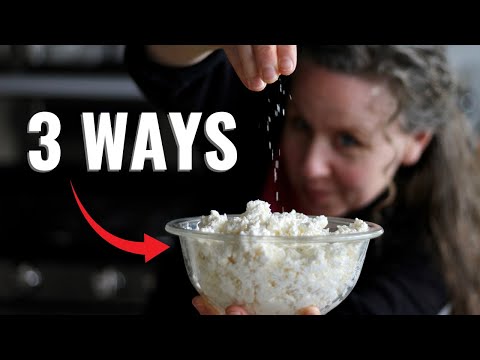
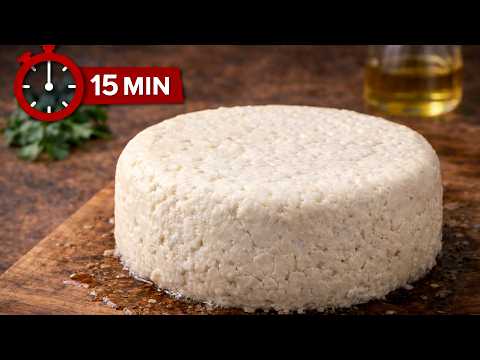

Similar American Videos
(24 videos)
Batch Prepped SLOW COOKER RECIPES for an easier week
moon + magnolia

Honey Mustard Chicken Recipe
Jen Cooking
Steamed Zucchini - Bravo Charlie's Episode 23
Charlie Moore

How to make MACARONI SALAD by Kelly Henry #macaronisalad #pastarecipes #veggierecipes
Kelly's Kuisine

Dorito Taco Salad -- Throwback Video Series
Southern Country Living

Sausage Hash Brown Breakfast Casserole
Smokin' & Grillin with AB

Apple Fritter Doughnuts
Laura in the Kitchen

Crab Bisque
Dirty Spoons
Apple Cranberry Pecan Salad
Arabesque Media
Peanut Butter Cookies
Omar Tellow

Pineapple Upside Down Cake | New Year Party Recipe | By Ashley Derick MacDonald | For Cuisine Canvas
Cuisine Canvas

Tuna Noodle Casserole - Food Wishes
Food Wishes

Boston Cream Pie
Preppy Kitchen

Southern Fried Chicken
Smokin' & Grillin with AB

Professional Baker Teaches You How To Make CHOCOLATE CHIP COOKIES!
Oh Yum with Anna Olson

Smoked Shotgun Shells
Meat Church BBQ

Broccoli Cheese Soup
Preppy Kitchen

Broccoli Cheese Soup
Preppy Kitchen

10 Recipes To Sweeten The Holiday Season
Scrumdiddlyumptious

Potato Salad
J. Kenji López-Alt

Peach Cobbler
Preppy Kitchen

5 Classic American Desserts You Must Try at Home! 🇺🇸🍰 #delicious_delights #dessert
Delicious Delights

7 Best Kids Lunch Box Recipes By Recipes Of The World
Recipes of the world
Mousse à la pêche par Pierre-Dominique Cécillon pour Larousse Cuisine
LarousseCuisine
Similar Recipes From Other Cuisines
(24 videos)
Mayonnaise Recipe | How to make Mayonnaise
Recipes by Carina
✅NIGERIAN WHOLE WHEAT BREAD RECIPE(100%)| NIGERIAN BROWN BREAD| NIGERIAN BREAD RECIPE
Queenvarieties Channel

Avocado Toast
Cooking with Coit

RECETTE INRATABLE | BRIOCHE MAISON | Pour les nuls en brioche, comme moi !
Eloë 🌸

Recette de Brioche maison moelleuse sans Robot !#brioche # brioche maison
Cooking by Nissou

Simplement la recette de ma brioche maison Francine.
Choumchoumnass.🌹

Boulangerie - La pâte à brioche
BaKnutt

La Brioche parfaite. Ma recette de brioche à la maison super facile pas à pas .
Boulangerie Pas à pas

recette Brioche maison facile
douja monde

Brioche extra moelleuse au Thermomix ® "recette facile"
Gourmandise et plaisir

Comment faire une baguette ?
VCE French - Pierrick Hubert

RECETTE BAGUETTE MAISON : LA MEILLEUR :)
Nora

BAGUETTE TRES SIMPLE ET RAPIDE
Sabrina sabi

4 petites baguettes maisons à la main dans votre four
Jean Lépine

🥖Baguettes homemade croustillantes/mie aérée🥖
Selen Kaymaz

Baguettes fait maison
cuisine et régal

🥖 BAGUETTE MAISON SANS PÉTRISSAGE/ROBOT/MOULE 🥖 la recette express et inratable. Deli Cuisine
Deli Cuisine

Recette de la tradition - la baguette comme à la boulangerie
Tziganette

RECETTE FACILE LES BAGUETTES CROUSTILLANTES FAITE MAISON
Casa Bena Cuisine

Baguette express et INRATABLE
Marjosamira Cook

Baguette 1heure. 100%maison 100% rapide et facile.
Made'moizelle Cloé

🥐 Croissant 🥐Thermomix faits maison facile! 👍- Préparation pâte feuilletée pliage portefeuille Tuto
Antoine Minart

Croissants simples
Recette Chef Latifa الشيف لطيفة

RECETTE ORIGINALE DES CROISSANTS MAISON, PAINS AU CHOCOLAT, CHOCOLATINES AU BEURRE, FACILE, ASTUCES
PAPA GÂTEAUX